How to Choose Garden Mulch for the Look and Feel of a Bed
Choose garden mulch by matching its colour, texture and character to your planting, so exposed soil looks considered and the bed feels cohesive.
Which garden mulch will make a bed look finished without fighting its plants? Garden mulch is a covering laid over exposed soil, and its colour and texture can change the whole impression of a planting. Bark, wood chips and gravel each create a different surface, so the best choice depends on the garden’s character as much as on what is readily available.
Mulch is not a single material or a decorative sprinkle. It forms a visible layer between the plants and the surrounding path or lawn. That layer can soften a border, make foliage stand out or give a planting a more structured feel. Choosing well means deciding what the surface should contribute, then selecting a material whose appearance suits the plants and setting.
What mulch adds
Bare soil can be a useful part of a garden, but a broad expanse of it may make a bed look unfinished, especially where plants are spaced apart or still establishing. Mulch covers that open ground with a consistent surface. The eye reads the planting as one composition rather than as separate plants dotted across soil.
The material also changes how the bed feels to look at. Fine, even particles can seem quiet and orderly. Chunkier pieces catch the eye and suggest a looser, woodland-inspired planting. Pale stone can make a border feel crisp, while dark organic material often gives leaves and flowers a strong visual contrast. These are impressions, not fixed rules: nearby paving, fences, foliage and light all affect how a colour reads.
Mulch should leave room for plants rather than burying them. Keep the material clear of stems and crowns, and do not cover low foliage that is meant to spread. Where a product’s suitable use or application depends on its label, manufacturer instructions or local guidance, follow that information.
Bark and wood chips
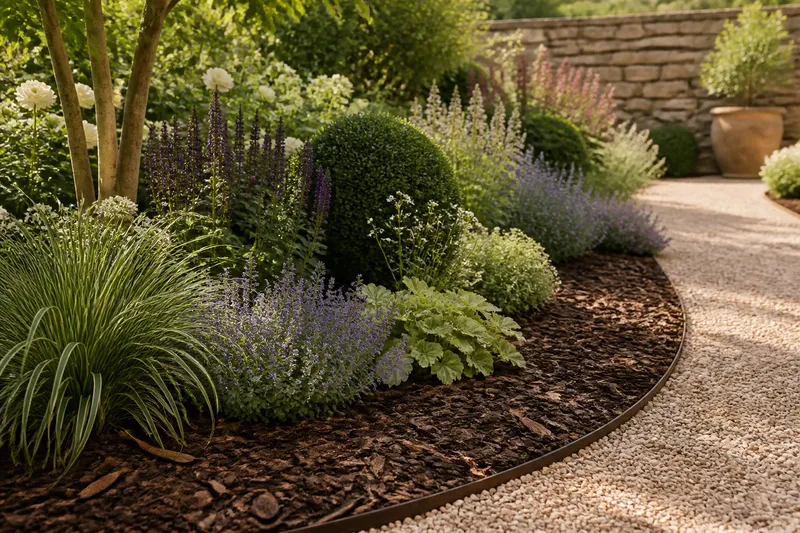
Bark and wood chips are organic mulches: materials from plants that gradually break down. Bark usually has an irregular, layered appearance, while wood chips can look more varied in size and shape. Both bring a natural, informal character that sits comfortably among shrubs, grasses and woodland-style planting.
Bark can work well where a bed needs a relatively unified, textured surface. Its pieces often settle into an uneven mosaic, adding visual depth without the tidy uniformity of a fine, sifted material. Wood chips can appear more casual, particularly if the pieces vary in colour. A local tree-care supplier or garden centre may offer a choice of grades; ask what the material is made from and whether it is intended for garden beds.
Organic mulch changes as it weathers. Fresh material may look brighter or more distinct than it will later, and its surface can become less even as pieces settle and break down. That change suits gardeners who like a living, natural finish. It may be less appealing if the aim is to preserve a sharply defined, consistent surface.
These materials tend to suit planted borders where a soft transition matters more than a crisp architectural line. They can also tie together a mix of shrubs and perennials without making the bed look formal. If the surrounding garden already has a lot of strong textures, a simpler grade can keep the surface from competing with the plants.
Compost and fine bark
Compost and finer organic mulches create a more subdued surface than chunky bark or chips. Their smaller particles can make the soil look visually continuous, which suits a closely planted border or a bed where flowers and foliage should remain the main focus. The effect is less like a decorative layer and more like a softened, dark ground plane.
Compost may also be chosen for its role in the soil, but its quality and intended use vary. A product sold for soil improvement is not automatically the right material for every visible surface. Read the bag or ask the supplier what it is designed for, especially if appearance is a priority. Fine materials can be easier to place around small plants, though they may be less visually distinctive than coarse pieces.
This approach suits gardeners who prefer an understated finish and want the plants to carry the colour and texture. It can be a thoughtful fit for mixed borders, productive beds and naturalistic planting where a strong decorative contrast would feel distracting. Its quieter appearance is also useful when the garden includes several competing materials, such as brick edging, painted timber and patterned paving.
Gravel and stone
Gravel and other mineral mulches keep a defined, non-organic surface. Their colour and grain can make a bed feel more formal or deliberately composed, especially beside stone paving, gravel paths or simple architectural planting. A pale aggregate can brighten a shaded-looking corner; a darker one can create a restrained background for silvery foliage or vivid flowers.
Stone is visually persistent compared with material that breaks down. That can suit a bed designed around structure, repeated shapes and a consistent surface. It is less suited to someone who wants the mulch itself to gradually blend into the soil. Mineral material can also create a strong contrast with nearby planting, so consider a sample beside actual leaves, edging and paving rather than judging colour in a shop alone.
Texture matters here as much as colour. Rounded gravel tends to read differently from angular chips, and a fine grade gives a different impression from larger stones. Choose a grain that feels proportionate to the scale of the bed: a delicate planting can be overwhelmed by coarse rock, while a broad, architectural border may make a very fine surface appear fussy.
Gravel and stone are not interchangeable with organic mulch in every planting situation. Consider the plants’ needs, the bed’s purpose and any product guidance before choosing a mineral surface. Where conditions are uncertain, ask a knowledgeable local nursery or garden professional about the material’s suitability.
Choosing by garden character
Start with the mood already present in the space. A cottage-style border with loose planting may look at home with bark or chips. A restrained arrangement of grasses and clipped shrubs might suit gravel. A mixed border with abundant flowers can benefit from a quieter, finer surface that does not compete for attention.
Then look at the materials around the bed. A mulch that echoes the colour of a nearby path can make the garden feel connected, while a deliberate contrast can help define the planting. Avoid matching everything automatically: repeating one tone can look coherent, but a small shift in colour or texture may keep the bed from seeming flat.
Say you have a narrow border beside a pale stone path, planted with soft grasses and a few dark-leaved shrubs. If you want the planting to feel relaxed, you might compare a natural bark sample with a fine, muted gravel sample against the path and leaves. The bark would be expected to soften the edge, while the gravel would likely make the line feel crisper; choose the one that better supports the character you want, rather than assuming either is universally better.
- For a soft, informal border: consider bark or wood chips with a natural, irregular texture.
- For a quiet background: look at compost or a fine organic mulch that lets flowers and foliage lead.
- For a crisp, structured bed: compare gravel or stone with the path and edging already in place.
- For a mixed planting: choose a restrained colour and grade so the surface does not compete with varied leaves and blooms.
- For a strong material contrast: test a sample beside the bed, then check it in both bright and overcast light.
How should garden mulch look beside plants?
Should mulch match the path?
It can echo the path, but an exact match is not necessary. A related tone often connects the bed to its surroundings, while a gentle contrast can make the planting boundary clearer.
Is dark mulch always better?
No. Dark material can make pale flowers and leaves stand out, but it may feel heavy beside dark paving or dense foliage. Compare the sample with the whole bed, not just one plant.
Which texture suits small plants?
A finer surface often looks more proportionate around delicate or closely spaced plants. Chunky bark or large stone can overwhelm them visually, so consider the scale of both the planting and the bed.
Can different mulches share one garden?
Yes, when each material has a clear reason for being there, such as a distinct planting style or a different surface around a particular bed. Keep changes deliberate and avoid abrupt shifts that make the garden feel pieced together.
Making the choice
Bring the decision back to three questions: should the bed feel soft or crisp, should the mulch be noticeable or quiet, and should its surface change naturally over time? Bark and chips lean towards an informal, organic character; compost and fine bark tend to recede; gravel and stone provide a more defined, enduring visual surface. Within each group, colour and particle size still matter.
If possible, compare a small amount of each candidate in place before choosing the whole bed. Look at it beside the edging, in the light the bed actually receives and against the plants at different distances. A material that looks appealing in a bag may read quite differently across a broad surface. That simple comparison makes garden mulch easier to choose by the quality it gives the planting, rather than by appearance in isolation.