The Perfectly Matched Patio Set Myth: Build a Cohesive Outdoor Room with Contrast
The perfectly matched patio set myth can make a terrace feel like a showroom. Use a limited colour palette and varied shapes for a more personal room.
Does a patio need matching chairs, a table and a sofa to look finished? The perfectly matched patio set myth says yes, but a coherent outdoor room can come from repeating a few colours and materials while varying the furniture’s shapes. That approach gives a patio visual order without making every piece look as if it came from the same box.
The distinction is useful: matching means objects share the same design, finish or set; coherence means they feel related. A black metal chair can sit comfortably beside a timber bench if the arrangement has a clear palette and the pieces suit their roles. The aim is not random contrast, but a room that feels collected rather than copied.
Coherence without matching
Outdoor furniture is often sold in coordinated sets because a single purchase solves several decisions at once. Repeated frames and cushions can make a space feel orderly, particularly when a patio is bare. But a complete set is only one way to create that order, and it may not suit how you actually use the space.
Instead, think of coherence as a thread running through different objects. That thread might be a shared colour, a recurring material, or a similar visual weight. If the thread is easy to spot, the furniture can differ in shape and still belong together.
This matters because shapes direct the eye. A long bench, a round table and chairs with open backs create a more varied outline than a row of identical pieces. That difference can make a small terrace feel less like a furniture display and more like a place arranged for conversation, a quiet coffee or reading outdoors.
Choose a limited palette
A palette is the small group of colours that appears across the furniture and nearby details. It does not have to dictate the whole garden. It simply gives the main pieces a common visual language.
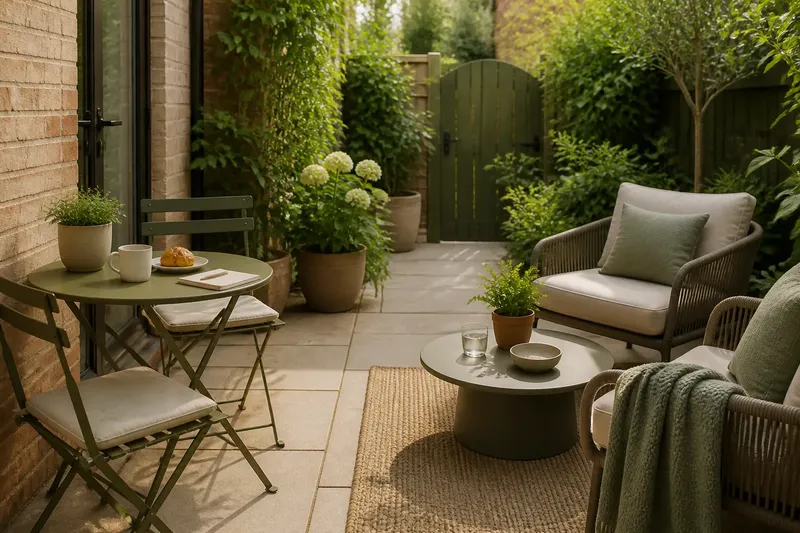
Start with what is already fixed or prominent: paving, brickwork, a fence, a wall or the view from the doors. Then choose a restrained group of tones that works alongside it. For example, slate paving might sit well with charcoal frames, soft green cushions and a natural timber accent. The colours need not be identical; they should look as if they were chosen with one another in mind.
Use colour in different amounts. A frame can carry a dark tone, while cushions or a small outdoor rug repeat a softer colour. This lets one shade act as an accent rather than forcing every object to compete for attention. If everything is colourful, there may be no visual rest; if everything is neutral, a smaller accent can give the arrangement character.
Look at the palette from indoors as well as outside. A patio often appears through a window or open door, so a cushion colour that works in the garden should also sit comfortably beside the room’s interior. A quick way to judge is to place fabric or paint samples near the doorway and view them in daylight and shade before choosing larger pieces.
Vary shapes with purpose
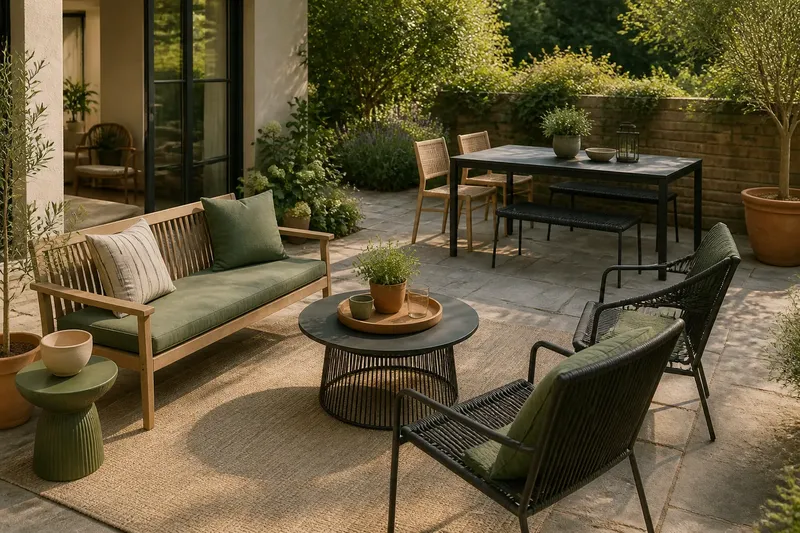
Once the palette is clear, let the outlines differ. Pair a straight-edged bench with a rounded side table, or use woven chairs around a simple rectangular table. The contrast works best when each piece has a clear job: somewhere to sit, somewhere to set down a drink, or a surface for serving.
Pay attention to visual weight, not just colour. A heavy, solid bench can dominate beside delicate wire chairs, even if both are dark green. One way to bridge that difference is to repeat a related material or tone elsewhere, such as timber on the bench and a timber tray on the table. Repetition links the pieces without making them twins.
Shape can also help organise a seating area. A round table softens a group of angular chairs; a narrow bench can make use of an edge that would otherwise be awkward. These choices should follow the patio’s actual circulation and the way people move around it, rather than a rule that every set needs a central table and matching seats.
Repeat details, not whole sets
Small repeated details can make mixed furniture feel deliberate. A shared finish on chair legs, a similar weave in two different pieces, or the same cushion colour on a bench and a chair may be enough. Repeating one feature is often more convincing than repeating everything.
Accessories can carry the link, too. A ceramic planter, an outdoor cushion and a lantern might share a muted terracotta tone, while their materials and forms remain different. Keep such accents near the seating area so they connect the objects people notice together. A colour used once on the far side of the garden may not help the furniture read as a group.
Plants and the building itself also contribute colour and texture, but they need not be pressed into service as a design scheme. A leafy view can make a green cushion feel at home; brick can relate to a warm-toned pot. Treat these surroundings as context, then choose furniture that still makes sense when the plants change with the season.
Check the whole arrangement
Before buying another piece, look at the patio from the doorway and from the main seat. Notice where the eye lands first. If one object feels disconnected, ask whether it differs in colour, material, scale or shape. A small repeated detail may be enough to connect it; sometimes the better choice is to move it elsewhere.
Say you have a charcoal metal dining table, two pale timber chairs and a dark woven bench. The bench feels separate at first. You could add seat pads in a muted green to the timber chairs and use a green outdoor cushion on the bench; the repeated colour would give the different shapes a shared link, while the charcoal table remains a calm anchor.
Consider the view in changing light. A pale cushion may nearly disappear against a light wall, while a dark frame can become visually strong in shade. Move a sample or spare cushion around the seating area before committing to a larger change. This is a simple way to see whether a proposed accent connects the furniture or draws attention to an unwanted mismatch.
Practical use still comes first. Check that chairs can be pulled out, paths remain clear and surfaces suit the weather and care you are prepared to give them. The right materials and maintenance depend on product labels, manufacturer instructions and local conditions, so consult those before choosing or treating furniture.
Questions about mixed patio furniture?
Can outdoor furniture be different colours?
Yes. Choose a small group of colours that relates to the paving, exterior or garden view, then repeat one or two tones across separate pieces. A limited palette makes variation feel considered rather than accidental.
How many materials should a patio use?
There is no fixed number, but a few clearly related materials are easier to bring together than many competing finishes. If timber, metal and woven furniture all appear, repeat a colour or detail so the arrangement has a visible connection.
How do I make old patio furniture look like it belongs?
Start by identifying what is worth keeping: perhaps a useful shape, a durable frame or a finish that suits the setting. Then connect it to the other pieces with a cushion, pot or small accessory in a shared colour rather than replacing everything at once.
Do cushions have to match the furniture?
No. Cushions can provide the link between furniture that differs in shape or material. Choose colours that sit comfortably within the palette, and consider whether the fabric’s texture adds contrast without making the seating area feel busy.
Make room for character
A patio can feel settled without looking uniform. Begin with a limited palette, choose different shapes for different uses, and repeat a small detail where it helps the arrangement hold together. The perfectly matched patio set myth fades once you look for relationships rather than identical pieces.
Leave space for one object that matters to you, whether it is a well-used bench, a family table or a chair chosen for its shape. If it fits the way you spend time outside and has at least one clear link to the rest of the room, it can give the whole arrangement a more personal centre.