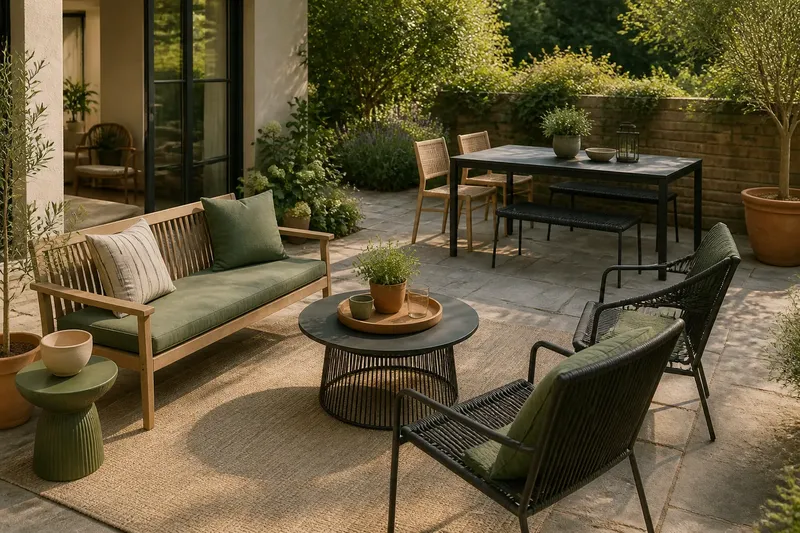
Bistro Table or Low Lounge Set for a Compact Patio?
Choose a bistro table or low lounge set for a compact patio by matching the furniture to your routine, walking routes and storage needs.
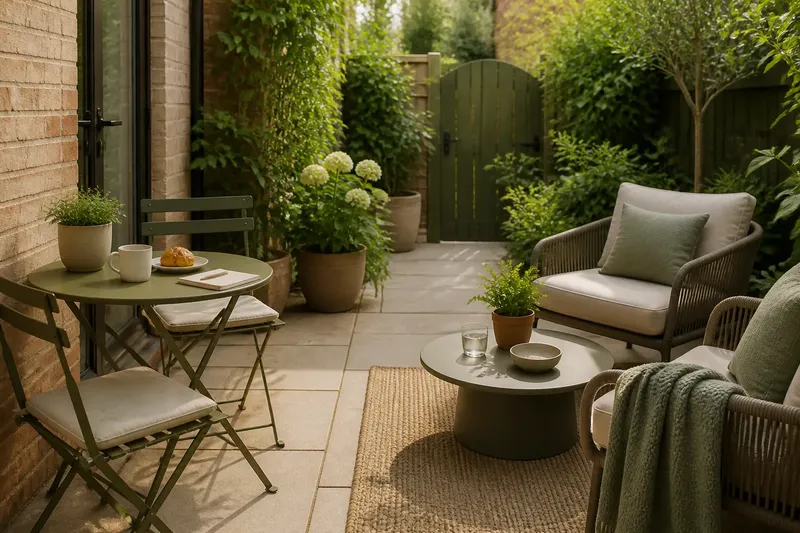
On a compact patio, a bistro table or low lounge set can change whether the space feels ready for breakfast, a quiet afternoon or a conversation after work. The better choice depends less on style than on what you do there, how you move between the door and garden, and whether the furniture can shift when plans change.
Use these comparisons to picture the patio in use, not just as a furniture arrangement. A table and chairs favour upright tasks; low seating invites you to settle in. Either can work in a small area, provided its footprint leaves a comfortable route through.
1. Start with the main activity
Think about the activity you most want the patio to support. A bistro set suits meals, coffee, writing or other tasks that benefit from a firm surface and an upright posture. It gives cups and plates a stable place to sit, and a chair can be pulled out when someone joins you.
A low lounge set is better suited to lingering: reading, talking or taking a break between garden jobs. Its relaxed seat and lower table make it natural to stay for a while, but less convenient for a proper meal or work that needs a level surface. If both dining and lounging matter, decide which one should be easy to do every day.
Say you use the patio for a morning mug and an occasional sandwich, but rarely sit outside for long. A small bistro table could support both habits without making the whole patio feel like a sitting room. If your regular routine is to read outside, with food only brought out now and then, a lounge chair and compact side table may suit you better.
2. Compare the usable footprint
Furniture occupies more than the space beneath its legs. A dining chair needs room to slide back and for someone to sit down; a lounge set needs space around its arms and low table. Measure the area you can actually use, including any door swing, gate, drain cover or planter that must remain accessible.
For a bistro set, check the full arrangement with the chairs drawn out rather than measuring only the tabletop. Round tops can make it easier to move around corners, while a square or rectangular top may sit neatly against a wall. The best shape depends on the patio’s outline and the route people need to take.
Low furniture can look compact because it sits close to the ground, yet deep seats may take up substantial floor space. A pair of separate lounge chairs may be easier to position than a fixed corner set. Check whether you can reach the door, bins or garden path without turning sideways or stepping over a chair leg.
3. Protect the walking route
Choose a route first, then place furniture around it. Trace the usual journey from the house door to the garden gate, washing line or outdoor tap. Keeping that path clear makes a small patio easier to use, particularly when someone is carrying a tray or watering can.
A table pushed to one side may leave a direct route open, but chairs can temporarily block it when occupied. Low seating often creates a broad cluster that encourages people to walk around rather than through it. Neither layout is automatically better: the question is where the occupied furniture leaves a natural passage.
Mark likely furniture positions with folded blankets or cardboard before buying anything. Sit where the chairs would go, open the door, and walk the route as you normally would. This simple mock-up can reveal a pinch point that a neat plan on paper misses.
4. Consider how people sit
Dining chairs make it straightforward to sit upright and stand again, which can be useful for a short meal or a conversation that includes reaching for plates. They also make it easier to pull one seat closer to the table. If the patio is shared, think about whether visitors will need room to approach and sit without moving other furniture.
Low seats ask people to lower themselves and rise from closer to the ground. That may feel comfortable for some and awkward for others, so consider the people who will use the space regularly rather than choosing by appearance alone. If accessibility, balance or mobility is a concern, seek advice from an appropriate professional and try the seat in person before deciding.
Seat depth matters as much as seat height. A deep lounge chair can be pleasant for reclining but may feel cumbersome for a brief cup of tea. A more upright dining chair can be easier for conversation at a table, though it may not offer the same relaxed posture.
5. Check the table’s role
A bistro table is a working surface as well as a place to gather. Consider what must fit on it: a breakfast plate, two cups, a book or a small plant. A top that is too small can make meals awkward, while a larger top may dominate the patio when it is empty.
Lounge furniture usually pairs with a lower table. That height works for a drink or book within reach while seated, but it may be less practical for eating a full meal. If you choose lounge seating and still want to dine outside, consider whether a separate narrow table can fit beside it without blocking the route.
There is also a useful middle ground: upright chairs with a small side table, or one lounge chair paired with a compact bistro table. Mixing furniture can solve a specific need, but only if each piece earns its place. Avoid adding a second table simply because the first arrangement looks unfinished.
6. Plan for moving and storage
Light, separate pieces are easier to rearrange than a fixed sofa or heavy bench. That flexibility matters when you need to clear access, make room for a visitor or bring furniture under cover. Foldable bistro chairs can be stored away between uses; lounge seating may offer more comfort but can be bulkier to move.
Look at where furniture will go during poor weather or when the patio is needed for another purpose. A small shed, garage or sheltered corner may determine whether stackable chairs are practical. Check the product label and manufacturer’s care guidance for weather exposure and storage requirements, as these vary by material and construction.
Account for cushions, too. Loose cushions need somewhere dry to live, and a lounge set may require more of them than a simple dining arrangement. If carrying them indoors each evening would become a chore, choose a setup that works comfortably with fewer soft pieces.
7. Match the material to the setting
Furniture should suit the patio’s exposure and the effort you are willing to spend caring for it. Powder-coated metal, timber, woven synthetic materials and plastic all have different surface finishes and care needs. A shaded, sheltered patio presents different conditions from one exposed to rain or strong sun.
Look closely at joints, feet and edges as well as the main frame. A chair that sits unevenly on paving can feel unstable, and a table base should not intrude where knees need to go. If the patio is small, open-legged designs can make it easier to sweep underneath and may keep the floor visually less crowded.
Colour and finish can help furniture sit quietly against brick, stone or timber, but they should come after comfort and fit. Take a photograph of the patio and compare finishes in daylight if you are unsure. The aim is not to make every surface match; it is to choose pieces that do not compete with the space you already have.
Which layout suits your routine?
Is a bistro set better for eating outside?
Usually, yes, if meals and a stable tabletop are central to how you use the patio. Check that the chairs can be drawn back without closing the main walking route.
Does low seating save space?
Not necessarily, because deep seats can cover more floor area than their low profile suggests. Compare the full footprint, including the space needed to sit down and move around the furniture.
Can a compact patio fit both styles?
It may, if each piece has a clear purpose and the route remains open. A single lounge chair beside a small table can be more workable than trying to fit a complete dining set and a full lounge arrangement.
What should I try before buying?
Mock up the furniture positions, open nearby doors and walk the route while carrying something you use outdoors. If possible, sit in a similar chair and check whether its height and depth feel comfortable for the intended activity.
Choose around ordinary use
For a compact patio, the bistro table or low lounge set decision becomes clearer when you picture a typical day rather than an ideal gathering. A table-led layout is a strong fit for meals and upright tasks; low seating works better for relaxed time spent in one place. In either case, leave a clear way through and choose furniture you can move or care for without fuss.
Before ordering, make a final note of the patio’s usable area, the door and gate positions, the furniture’s full dimensions and the place cushions or foldable chairs will go. That small check helps turn a promising arrangement into one you can live with, season after season.