A Late-Summer Supper Built Around Flatbreads
Plan a late-summer supper built around flatbreads with make-ahead toppings and a serving order that keeps the cooking simple and leaves time to sit.
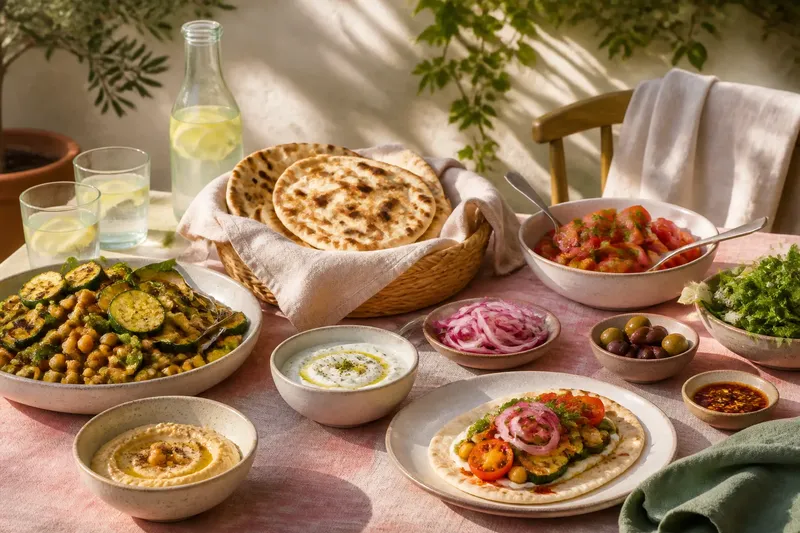
How do you serve a late-summer supper built around flatbreads without spending the evening beside the grill? Treat the breads as a warm, flexible base, then do most of the chopping, mixing and arranging before guests arrive. A few well-chosen toppings can suit different appetites without turning dinner into a queue of custom orders.
How should I plan the menu?
Build the meal around three kinds of topping: something substantial, something fresh and something sharp or creamy. For a late-summer table, that might mean bowls of grilled courgette and chickpeas, sliced tomatoes with herbs, and lemony yoghurt or a jar of chilli oil. Set out a modest selection rather than every possible combination; too many bowls take up space and make serving feel fussy.
Think about temperature as well as flavour. Flatbreads are most inviting when warm, but not every topping needs to be hot. A room-temperature tomato salad, olives and a bowl of hummus can sit ready while you heat the breads and finish one warm topping. Keep ingredients that need chilling in the fridge until serving, and bring them out when the first breads are nearly ready.
For a simple menu, choose one protein or filling that can be prepared ahead, such as cooked chickpeas, roast peppers or leftover roast chicken, plus two vegetables and one sauce. Offer a plain option for anyone who prefers fewer toppings. If guests have dietary needs, ask in advance and keep suitable ingredients separate with their own serving spoons.
What can I prepare ahead?
Do the tasks that hold well first. Wash and dry herbs, slice vegetables, make a yoghurt sauce, and mix a dressing in jars with tight lids. Roast or grill vegetables earlier in the day, then let them cool before covering and refrigerating. Chickpeas can be drained and dressed ahead; add delicate herbs shortly before serving so they stay bright.
Keep flatbreads wrapped until needed, following the packet guidance for storage. If making them yourself, prepare the dough earlier and allow for its resting time, rather than trying to fit dough-making around guests’ arrival. Set out a board, tongs, clean tea towels, serving plates and a basket lined with a cloth before you start cooking.
Say you have a bowl of grilled courgette, a tub of hummus and a bunch of mint ready before friends arrive. You can warm the breads while someone pours drinks, then put the toppings on the table as the breads come off the heat; the expected result is a meal that feels freshly assembled without requiring you to chop or mix during the first conversation.
How should I heat flatbreads?
Choose the method that suits your equipment and the kind of bread. A barbecue gives flatbreads a lightly toasted surface and a smoky edge, while a dry frying pan offers closer control in the kitchen or on a suitable outdoor hob. An oven is useful for warming several breads together, though they will not pick up the same char.
With a barbecue, use a clean area of the cooking grate and keep the breads within reach: they can warm quickly, and a brief turn is often enough. Tongs make handling easier. Stack the warm breads in a cloth-lined basket or wrap them in a clean tea towel to slow cooling, but avoid sealing them while steaming heavily, which can soften the surface.
For a pan, warm each bread over moderate heat and turn when it feels pliable and has a few toasted marks. Avoid adding oil unless the recipe calls for it; a little oil can make a bread crisp rather than soft. Check the bread’s packaging or recipe, and follow the manufacturer’s instructions and local rules for any cooking equipment.
What order keeps supper relaxed?
Arrange the evening so the table is ready before the final cooking begins. Put out plates, napkins, drinks and room-temperature toppings first. Keep cold sauces chilled until close to serving, and leave space for the basket of warm flatbreads. If the table is small, use a nearby side surface for spare bowls rather than crowding the place settings.
- Welcome guests with drinks and a small nibble that does not need attention.
- Bring out the prepared salads, dips and cooked fillings.
- Warm the flatbreads in manageable batches and keep them covered in the basket.
- Set out the warm topping last, then invite everyone to build their own.
- After the first round, warm another small batch only if people want more.
This order makes the bread the final fresh element, not a reason to delay the whole meal. It also lets you sit down once the first basket and toppings are on the table. If guests are happy to help, ask someone to carry bowls or pour drinks; keep the cooking itself with whoever is comfortable using the equipment.
How do I keep toppings balanced?
Flatbreads can become difficult to fold or pick up if they are overloaded. Offer toppings in separate bowls and let each person start with a thin spread, then add a small amount of filling and a crisp or fresh ingredient. A squeeze of lemon, a spoonful of pickled onion or a few olives can cut through richer toppings without requiring another cooked dish.
Keep wet ingredients in their own bowls until serving. Drain tomatoes or marinated vegetables if they release a lot of liquid, and serve sauces with spoons rather than pouring them over the whole platter. This helps the breads remain easy to hold, while guests can adjust the amount to suit themselves.
What should I serve alongside?
Choose sides that can be served without a second cooking session. A green salad with a simple dressing, sliced melon, olives or a bowl of fruit all fit a late-summer table. If the flatbreads already carry rich toppings, favour something crisp and lightly dressed; if the toppings are mostly vegetables and herbs, hummus or a bean salad can make the meal more filling.
For dessert, prepare something that needs little attention after supper, such as peaches or berries served with yoghurt. Keep it uncomplicated, and clear only what is needed to make room. The aim is to leave the host with enough time to enjoy the meal, not to create a second round of serving duties.
How can I adapt the supper?
Use the flatbreads as a flexible centrepiece rather than a fixed recipe. Swap chickpeas for beans, use grilled aubergine instead of courgette, or add a separate bowl of cooked meat if that suits your guests. The main phrase, late-summer supper built around flatbreads, works as a plan precisely because the base stays familiar while the toppings can follow what is available.
For a smaller gathering, place the toppings on one board and warm breads as needed. For a larger group, make two topping areas so people can serve themselves without bunching around one table. Keep the choice focused, the breads covered between batches and the sauces ready before cooking starts; that small bit of organisation leaves the evening open for conversation.